


When asked to define wisdom, Socrates just shrugged. He said he couldn’t find it, whatever it was, either in himself or in any of his fellow citizens.
The news from Monika Ardelt is more encouraging. Yes, she reports, wisdom is rare. No, it is not extinct. If you know where to look, you can catch glimpses of it, darting in and out of its usual habitat.
Most scholars seek wisdom in folklore, ancient texts and the spiritual visionaries of the ages: Siddhartha, Confucius, Lao Tsu, Buddha, Abraham, Muhammad, Jesus Christ.
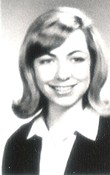
Ardelt, a 47-year-old University of Florida sociologist, bypassed the usual suspects, searching instead among ordinary souls.
She found wisdom in a 77-year-old retired school administrator who learned, over his lifetime, to see problems as games, meant to be played out rather than feared. “I’ve never allowed any outside force to take possession of my being,” he said.
She found wisdom in an 85-year-old homemaker who lived by the creed: “Do whatever has to be done, whether you want to do it or not.” The strategy served her well. She had used it most recently to get through painful rehab from two knee operations, succeeding where others often failed, eventually ditching both her walker and her cane in favor of her own two feet.
Ardelt found wisdom in a 59-year-old woman with only 10 years of education who, in the middle of a hurricane, pretended to fall asleep in order to calm her children.
“Somebody has to be cool,” the woman explained. “It works during funerals, too.”
Since the mid-1990s, using church and social groups and retirement and health facilities near Gainesville as her hunting ground, Ardelt has discovered wisdom among scores of senior citizens, using questionnaires, one-on-one interviews and even a 39-question “wisdom quiz” to ferret it out among the elders.
Seeking contentment
In a 1998 study, she interviewed 82 women and 39 men between the ages of 58 and 82, asking them, in essence, how happy they were, and why. She was hoping to see how wisdom would stack up against health and money as a contributing factor to contentment. Wisdom beat out both challengers decisively.
More recently, Ardelt decided to find out what strategies both wise and relatively unwise individuals use when confronted with the hardships and obstacles of life.
She started by asking 180 senior volunteers to anonymously take a test she called a “personality and aging well study. ” The questionnaire was actually designed to gauge how each individual scored on a “wisdom” scale, based on qualities most often associated with that virtue: selflessness, compassion, objectivity, flexibility and a deep, unblinking understanding of life and human nature.
Then subjects were interviewed individually about how they handled difficult situations in their lives and were secretly given yet another score based on their answers.
Ardelt selected the three who scored the highest and the three who scored the lowest and compared each trio to the other.
What she quickly realized was that wise elders tended to use three main strategies in dealing with difficulties.
They distanced themselves from a crisis so it would not overpower them, taking a step backward to calm themselves — to become, as the one respondent phrased it, the “cool” one.
They did what they could to actively cope with a challenge — working hard at rehab after a knee operation, for example, rather than giving in to self-pity and pain.
And when a crisis arose in their lives, they applied their own personal codes, or “life lessons,” such as never giving in to an outside force, or always doing what needs to be done.
Ardelt said she learned just as much about wisdom by examining the responses of those who were least in touch with it. The three who scored lowest in the “wisdom profile” were “extremely vulnerable and defenseless when experiencing extreme hardships in life,” she said. They suffered through ordeals without trying to analyze or cope with them. They tended to believe there was nothing they could do about obstacles such as financial problems, health problems and the behavior of errant spouses.
Most dramatically, while wise individuals rarely complained and talked often and with obvious delight about the welfare of those they loved during interviews, their low-scoring counterparts much preferred to discuss themselves and their own never-ending catalog of complaints.
Self-absorption, and the unhappiness that comes with it, has become a recurring theme in Ardelt’s observations. “It’s striking to me just how harmful self-centeredness is to the individual,” she said.
Influenced by family
By the time she decided to begin studying wisdom among elders, Ardelt was a graduate student. But the seeds of her interest in the subject may have been planted much earlier. She grew up near Wiesbaden, Germany, where her grandmother and great-grandmother cared for her while her parents worked in a nearby town.
She was closest to her great-grandmother — a wiry, independent, rail-thin woman who helped her husband operate a village tavern and had a reputation for wading into the middle of bar fights and breaking them up.
“I think you could say she and I are kindred spirits,” Ardelt said.
She has no need for her great-grandmother’s skills as a bouncer. But Ardelt likes to think she reflects her independence.
She is a sociologist in a field dominated by psychologists, who had begun to analyze wisdom in the early 1970s as part of a trend: Weary of focusing on problematic human behavior, some social scientists decided to begin analyzing psychological attributes.
Ardelt, the upstart interloper, took issue with the definition of wisdom that had been devised by the acknowledged leader in the field, the late psychologist Paul Baltes.
Baltes, director of the Max Planck Institute for Human Development in Berlin, said that wisdom was an “expert knowledge system.” To Baltes, wise individuals had “exceptional insight, judgment and advice.”
To Ardelt, that definition sounded rigid, too intellectual, and uninspiring, like a musician who played with technical expertise but without passion. What about being courageous enough to look, unblinkingly, at your own behavior and flaws? What about being flexible enough to see things from a different point of view? Isn’t that part of wisdom?
Proverbs are fine — but as anyone who has listened to a windy sermon or two can attest, being able to quote from them doesn’t mean you have wisdom.
“You can be an expert, but not necessarily wise,” Ardelt said. “Wisdom only has an effect if internalized.”
Recently a geriatric doctor took Ardelt’s wisdom test and didn’t like the results.
“She said, ‘At my age, in m/y profession, I should be getting a much better score. There must be something wrong with your test.’ “